

Short Description
Course Description
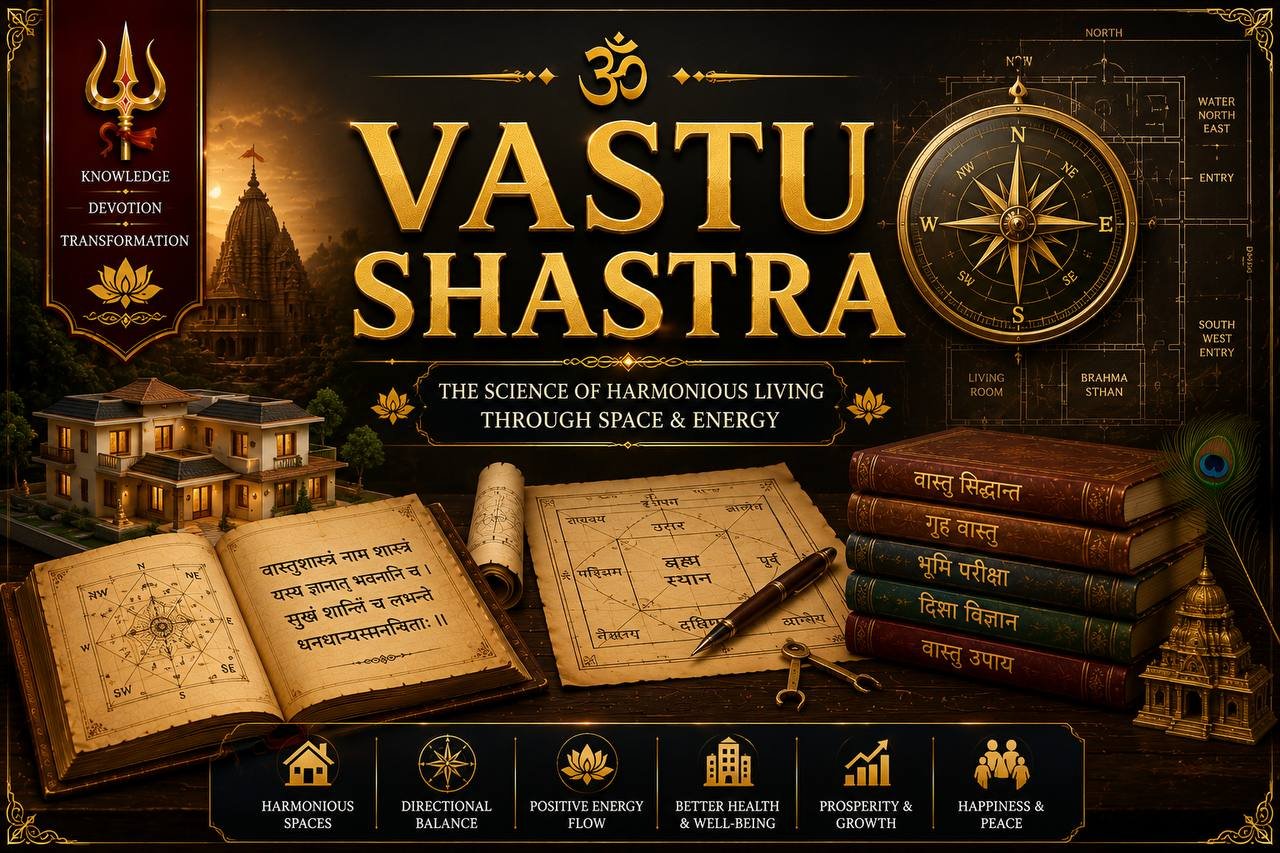
Vastu Shastra is an ancient Indian architectural and spatial planning tradition that focuses on the relationship between buildings, directions, natural elements and the surrounding environment. This program provides a systematic introduction to the traditional principles of Vastu and their application in residential, educational, commercial and other spaces.
The course covers important concepts such as the four directions, eight directions, Panchamahabhuta, Vastu Purusha Mandala, plot selection, building orientation, entrances, room placement, dimensions and traditional spatial planning principles.
Students learn how different areas of a building are traditionally evaluated according to direction, function and spatial arrangement. The program also introduces traditional approaches to identifying and addressing Vastu-related imbalances through appropriate planning and design considerations.
The course is suitable for students of Jyotisha and traditional Indian knowledge systems, architects, designers, researchers, Vastu learners and individuals interested in understanding India's traditional architectural heritage.
The objective of the program is to provide learners with a strong foundation in traditional Vastu Shastra and develop a systematic understanding of its principles, terminology and practical applications.